Hilltop churches, harbour sunsets & where to eat
Discover Rovinj: where Istria meets the sea
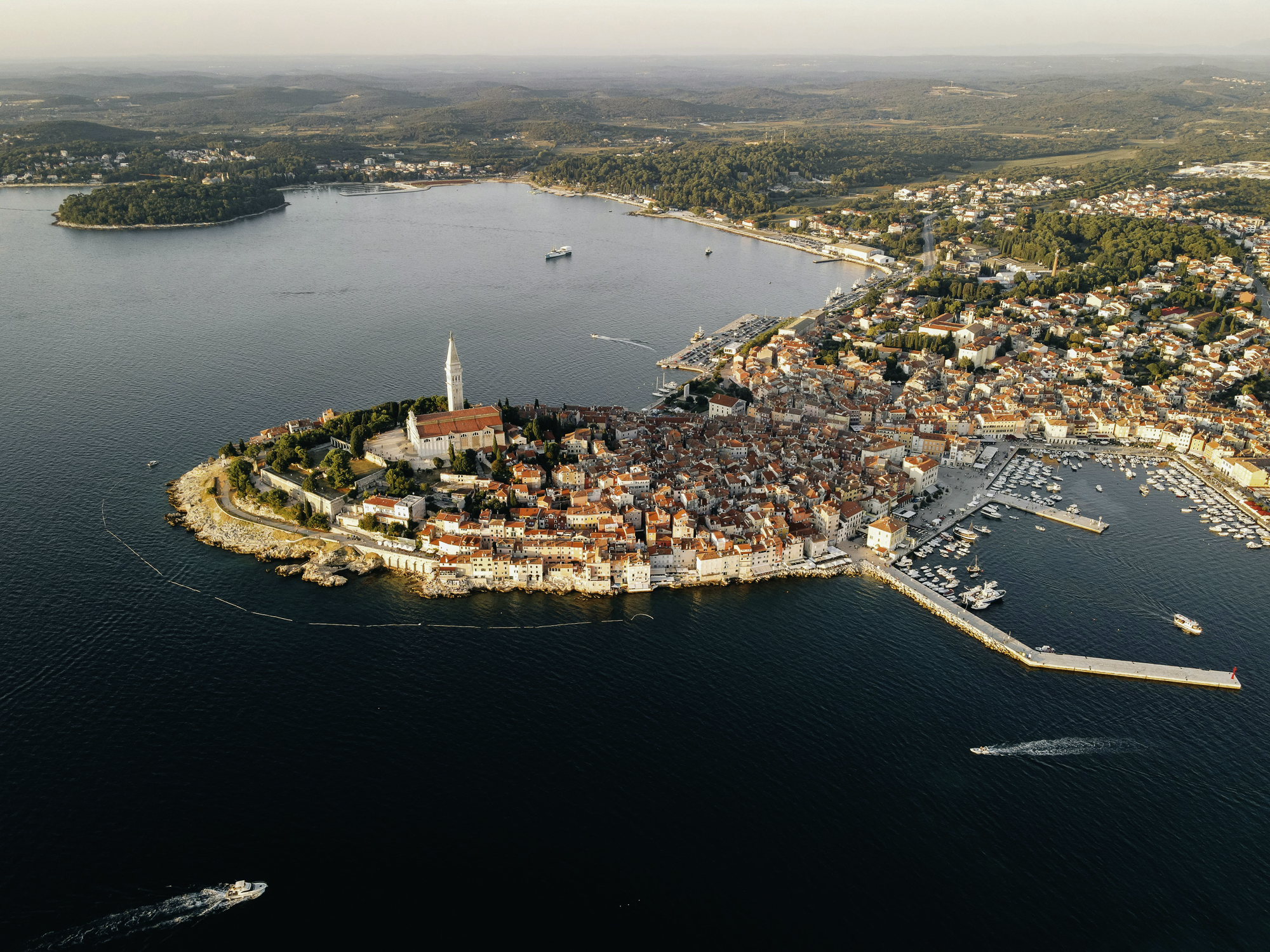
Rovinj is arguably Istria's most beautiful town: a pastel-coloured fishing port perched on a peninsula, with a church-topped hill, crystal-clear water, and a harbour full of bobbing boats. It has the look of an Italian coastal town, the feel of a Croatian village, and an atmosphere entirely its own. Come for the sunsets, stay for the food, and don't leave without climbing the hill at least once.
Getting there
By plane
Pula Airport (PUY) is about 40 km south of Rovinj, around 45 minutes by car. Direct summer flights operate from Amsterdam, Brussels, and across Europe with TUI, easyJet, and Croatia Airlines. Renting a car at the airport gives you the most flexibility, both for reaching Rovinj and for exploring the surrounding Istrian countryside.
By car
From the Netherlands, the drive to Rovinj takes around 13-15 hours via Germany, Austria, and Slovenia. Cross into Croatia at the Dragonja border post and follow the Istrian Y-motorway south. Rovinj is well signposted from the main Pula-Poreč road. The last stretch winds through beautiful Istrian countryside, take your time.
Getting around
Rovinj's old town is pedestrianized, so once you're there, you explore on foot. Most accommodation is within easy walking distance of the harbour. For beaches further out and islands, water taxis and boat tours depart from the harbour daily. Parking is available in several car parks just outside the old town; in high season, arrive early to get a spot.
Top sights to explore
The old town and St. Euphemia's church
Rovinj's old town is a tangle of steep, cobblestoned streets that wind upward toward the hilltop Church of St. Euphemia, the landmark you can see from almost everywhere in town. The climb is worth every step: from the top, you get sweeping views over the Adriatic, the islands, and the terracotta rooftops below. The church itself dates to the 18th century and houses the sarcophagus of St. Euphemia, the town's patron saint. Back down in the streets, look out for the artists' studios and small galleries tucked between the old stone houses. Rovinj has had a thriving art scene for decades, and many painters still live and work here.
Get up early and walk the old town before 9am: the light on the cobblestones is extraordinary, and you'll have the streets almost entirely to yourself.

The harbour and the batana boats
The harbour is the beating heart of Rovinj, lined with colourful fishing boats, outdoor restaurant terraces, and the occasional gelato queue stretching into the street. Keep an eye out for the traditional flat-bottomed batana boats, a symbol of Rovinj's fishing heritage and the subject of their own eco-museum just off the waterfront. In the evenings, the harbour comes alive with locals and visitors gathering to watch the sunset over the sea. Find a spot on the waterfront wall, order something cold, and don't be in a rush to move on.
Islands, pine forests and the best swimming spots
Just offshore from Rovinj lie the Rovinj Archipelago, a cluster of small, mostly uninhabited islands good for a half-day boat trip. The most popular is Crveni Otok (Red Island), which has pine forests, pebble beaches, and clear water ideal for snorkeling. Closer to town, the Golden Cape Forest Park (Zlatni Rt) stretches south along the peninsula with shaded walking paths and rocky swimming platforms jutting into the sea, a local favourite for afternoon swims and picnics under the pines.
Day trips from Rovinj
Poreč is just 40 minutes north with its UNESCO Basilica. The hilltop town of Motovun is under an hour inland: go for the views and stay for the truffle pasta. Pula is 45 minutes south with its spectacular Roman amphitheatre. Wine and olive oil tastings in the surrounding villages are also easy to arrange.

Where to eat and drink
Local specialities worth trying
Rovinj's food scene reflects the best of Istrian coastal cooking: freshly caught fish and seafood, house-made pasta, and local ingredients treated with care. Try brudet, a slow-cooked fish stew in a rich tomato sauce served with polenta, or simply grilled orada (sea bream) with olive oil and lemon. The local Malvazija white wine goes with almost everything. After dinner, look out for grappa made with local herbs, a traditional Istrian way to end the evening.
Top 3 restaurants in Rovinj
- Konoba Ulika
Hidden away in the old town, this intimate spot serves beautifully prepared Istrian food in a stone-walled dining room that feels like a private home. The pasta with truffles is outstanding, and the wine list leans heavily on local Malvazija and Teran. Book ahead in high season. - Puntulina
Set into the rocks on the western edge of the old town with the sea directly below, Puntulina is one of the most atmospheric restaurants in Istria. The fish is impeccably fresh, the portions are generous, and the sunset views from the terrace are worth the splurge alone. Arrive early to get a window seat. - Twin figs
Eplore Twin Figs in the centre of Rovinj, where historic charm meets gourmet cuisine. A beautiful restaurant with small courtyard, perfect for cocktails and shared dining. The menu offers surprises with creative dishes blending local Istian ingredients, fresh fish and playful twists.

Where to stay
Stay in a private villa near Rovinj
The Rovinj area has some of Istria's most sought-after holiday homes: stone villas with private pools hidden in the olive groves, modern retreats with panoramic sea views. Staying outside the town centre means more space, more quiet, and the freedom to come and go as you please. Browse our carefully selected holiday homes in the Rovinj region on the Homes of Croatia website.
Other accommodation options
Within the old town, there are several beautifully restored apartment rentals and small boutique hotels with stunning harbour views. Bear in mind that the old town can be noisy at night in peak season, so if you're a light sleeper, staying slightly out of town is a better choice. For families, there are also several larger resort complexes along the coast nearby.
Good to know
Best time to visit
June and September are ideal: the sea is warm, the town has a relaxed pace, and you can still get a table at a good restaurant without planning a week ahead. May and October are quieter still, with the landscape at its most beautiful.
July and August are when Rovinj is at its most alive: the harbour buzzes every evening, the restaurants are full, and the light on the old town in the summer heat is something you have to see. It's the most popular time for a reason. Book your villa and favourite restaurants early, the best spots go fast.
Tips and practicalities
Croatia uses the euro (€), and most places in Rovinj accept cards. The old town streets are steep and mostly cobbled, comfortable walking shoes are essential. Most of the old town is pedestrianized so you won't be able to drive in; drop your bags at your accommodation first before parking. Tap water is safe to drink throughout Croatia. Boat tours to the islands can be booked directly from the harbour, prices are generally negotiable outside of peak season.
Ready to stay near Rovinj?
Rovinj is one of those places that stays with you long after you leave. The best way to make the most of it is to slow down, settle in, and let the town reveal itself at its own pace. There's no better base for that than a private villa nearby. At Homes of Croatia, we carefully select a small collection of exceptional holiday homes in the Rovinj area, each chosen for its character, setting, and quality.

Pepijn, co-owner of Homes of Croatia, knows Croatia's best spots inside out. A passionate traveler always hunting hidden gems, he's your go-to guide for undiscovered places and the finest restaurants—food lovers, you've found your expert.

Inspiration for your stay